EQUIPMENT FINANCE FAQS ANSWERED FOR TRADIES & BUSINESSES
The Experts in Comparing Loans for Equipment
Equipment finance helps sole traders and small businesses access the tools, machinery and assets they need without large upfront costs. Our fintech platform and specialist brokers help compare options from multiple lenders. Below are answers to common questions about equipment finance, approvals, eligibility, costs and more.
Equipment finance is a business loan used to purchase assets such as machinery, vehicles or tools, allowing you to repay the cost over time instead of paying upfront.
Equipment finance is a form of business lending designed to help sole traders and small businesses acquire the assets they need to operate, generate income and grow. Instead of using working capital or savings to purchase equipment outright, a lender funds the purchase and the cost is repaid through structured instalments over an agreed term.
Depending on the finance structure, your business may:
Own the asset from day one (e.g. chattel mortgage)
Gain ownership at the end of the agreement (e.g. hire purchase)
Or simply use the asset during the loan period (e.g. lease)
The equipment itself is often used as security for the loan, which can improve approval chances and reduce interest rates compared to unsecured borrowing.
With Ausloans, Zink analyses your business profile, asset type and funding needs to match you with lenders that are most likely to approve your application — helping you compare options without applying multiple times.
How does equipment finance work in Australia?
A lender pays for the equipment on your behalf, and your business repays the loan over time with interest.
The equipment finance process in Australia typically follows a structured path:
Application – You provide details about your business, financial position and the equipment you want to purchase.
Assessment – Lenders assess your income, cash flow, credit history, time in business and the type of equipment.
Approval – Conditional approval may be issued, followed by final approval once documents and asset details are verified.
Settlement – The lender pays the supplier or vendor directly.
Repayments – Your business makes regular repayments over the loan term.
This reduces delays and improves the likelihood of approval.
What can equipment finance be used for?
Equipment finance can be used to fund most business-related assets used to generate income or support operations.
Equipment finance covers a wide range of asset types across industries. Common examples include:
Construction & earthmoving – excavators, loaders, tippers
Transport & logistics – trucks, trailers, commercial vehicles
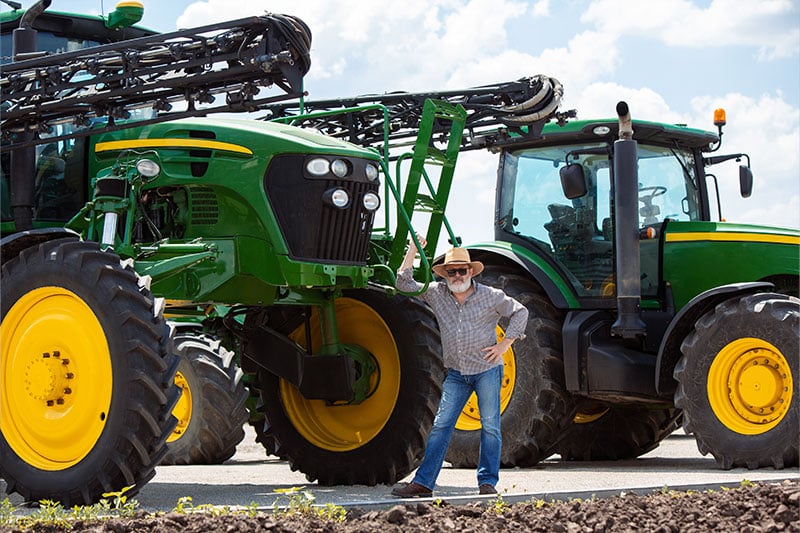
Agriculture – tractors, harvesters, irrigation systems
Medical & healthcare – imaging systems, dental equipment
Business & office – IT systems, fit-outs, POS systems
Lenders generally require that the equipment:
Has a clear business use
Holds identifiable value
Can be reasonably resold if required
Some specialised or older equipment may require specific lenders or structures.
With Ausloans, your equipment type is factored into the matching process, ensuring you’re connected with lenders that support your specific asset class.
How much can I borrow for equipment finance?
The amount you can borrow depends on your business income, financial position and the value of the equipment.
Equipment finance borrowing capacity is assessed based on your ability to service the loan and the value of the asset being financed. Key factors include:
Business revenue and cash flow
Existing debts and liabilities
Time in business
Credit history
Equipment type and resale value
Some lenders offer:
100% finance (no deposit required)
Higher borrowing limits for established businesses
Flexible structures for growing businesses
For large or specialised equipment, lenders may require additional financials or a deposit.
Ausloans helps you understand your borrowing range early by matching your profile with lenders whose criteria align with your situation.
Do I need a deposit for equipment finance?
No, many lenders offer equipment finance with no deposit, depending on your business profile and the asset.
While a deposit is not always required, it can influence both approval and loan structure. Many lenders provide up to 100% finance for eligible assets, particularly when:
The equipment has strong resale value
The business has stable income
The loan structure is secured
However, providing a deposit can:
Reduce your loan amount
Lower your repayments
Improve approval chances for higher-risk applications
Ausloans compares both no-deposit and low-deposit options so you can choose what works best for your cash flow.
What loan terms are available for equipment finance?
Equipment finance terms typically range from 2 to 7 years, depending on the asset and lender.
Loan terms are generally aligned with the expected useful life of the equipment. For example:
Short-term assets (IT, small tools): 2–3 years
Medium-term assets (vehicles, machinery): 3–5 years
Long-life assets (heavy equipment): up to 7 years
Choosing the right term involves balancing:
Monthly repayment size
Total interest paid
Asset depreciation
Longer terms reduce repayments but increase total interest, while shorter terms reduce overall cost but increase monthly commitments.
Ausloans helps structure loan terms that align with your business cash flow and how long you plan to use the equipment.
Eligibility & Approval for Equipment Finance
What credit score do you need for equipment finance?
There is no fixed credit score requirement, but stronger credit profiles generally access better rates and lender options.
Equipment finance approvals are not based on credit score alone. Lenders assess your overall financial position, including:
Business income and cash flow
Existing liabilities
Repayment history
Time in business
While higher credit scores can lead to:
Lower interest rates
Higher borrowing limits
More flexible terms
Many lenders also cater to:
Low-doc borrowers
Self-employed applicants
Businesses with imperfect credit history
Ausloans works with a wide panel of lenders, including those that specialise in non-standard applications, helping improve your chances of approval.
Can I get equipment finance with bad credit or an impacted file?
Yes, some lenders specialise in equipment finance for businesses with past credit issues.
Bad credit does not automatically prevent you from accessing equipment finance. Specialist lenders focus more on your current ability to repay rather than past financial issues.
They may consider:
Recent income stability
Business performance
Asset value and security
However, these loans may come with:
Higher interest rates
More structured repayment terms
Additional conditions
Ausloans helps match your profile with lenders that are more likely to consider your situation, improving your chances of finding a suitable option.
Can I get equipment finance as a sole trader?
Yes, sole traders can apply for equipment finance using their ABN.
Equipment finance is commonly used by sole traders and small business owners. Many lenders offer flexible approval options for:
Sole traders
Partnerships
Small companies
Low-documentation (low-doc) options may be available, using:
BAS statements
Business bank statements
Accountant declarations
This allows businesses without full financials to still access funding.
Ausloans helps identify lenders that support your business structure and documentation level.
How long does equipment finance approval take?
Many equipment finance applications receive conditional approval within 24–48 hours.
Approval timeframes depend on:
The lender’s process
The complexity of the application
How quickly documents are provided
Simple applications with complete documentation can be approved quickly, while more complex cases (large loans, specialised equipment, low-doc applications) may take longer.
Ausloans speeds up the process by:
Matching you with suitable lenders upfront
Ensuring documents are correctly submitted
Managing communication with lenders
What documents do I need for equipment finance?
Most applications require identification, proof of income and details of the equipment being purchased.
The exact documents required depend on your business structure and the lender, but typically include:
Identification (driver’s licence or passport)
ABN and business details
Business bank statements (usually 3–6 months)
BAS statements or tax returns (if available)
Equipment quote or invoice
For low-doc applications, lenders may accept alternative verification such as bank statements or accountant letters.
Ausloans provides a clear checklist and helps you prepare everything upfront to avoid delays.
Will applying for equipment finance affect my credit score?
Initial comparisons usually involve a soft check that does not impact your credit score.
When you first apply, platforms like Ausloans use a soft credit enquiry to assess your profile and match you with suitable lenders. This does not leave a mark on your credit file.
If you proceed with a lender, a hard credit check may be conducted as part of the formal application process, which can impact your score.
Using a broker or matching platform helps minimise unnecessary credit enquiries by directing your application to the most suitable lenders first.
Can I apply for equipment finance as a company?
Yes, companies can apply for equipment finance, and many lenders offer tailored solutions for incorporated businesses.
Equipment finance is widely available to companies operating under a registered business structure, including Pty Ltd entities. Lenders assess company applications based on factors such as business revenue, cash flow, time in operation, credit history and the type of equipment being financed.
In many cases, company applications may require:
Director details and guarantees
Business financials or bank statements
ABN and company registration information
Equipment quotes or invoices
Compared to sole traders, companies may have access to:
Higher borrowing limits
More structured finance options (e.g. chattel mortgages, leases)
Greater flexibility for financing multiple assets or fleet purchases
For newer companies or those with limited trading history, lenders may rely more heavily on director credit profiles and guarantees as part of the assessment.
With Ausloans, Zink matches your company profile with lenders that support your structure, helping identify suitable finance options while reducing unnecessary applications.
I need equipment for home projects but I’m not a business or don’t have an ABN. Can I still finance something like a forklift?
Yes, it may be possible — but it would typically be structured as a personal loan rather than equipment finance.
Equipment finance is generally designed for business use, meaning most lenders require an ABN and a clear commercial purpose for the asset. However, if you’re purchasing equipment for personal or hobby use — such as working on engines, home projects or private use — you may still be able to access funding through an unsecured personal loan.
In this scenario:
The equipment is not used as security for the loan
Approval is based on your personal income, expenses and credit profile
Interest rates may differ from business equipment finance
For example, someone restoring boat engines as a hobby or running projects from home may choose to finance tools or equipment this way.
With Ausloans, we can help assess whether your situation is better suited to equipment finance or a personal loan, and match you with lenders accordingly using Zink.
What interest rate will I get on equipment finance?
Equipment finance interest rates vary based on your business profile, the asset being financed and the loan structure.
There is no single rate for equipment finance, as lenders assess risk based on several factors. These include your business income, credit history, time in business, the type and age of the equipment, loan term and whether a deposit or balloon payment is used. Newer, high-value assets with strong resale value may qualify for more competitive rates, while specialised or older equipment may attract higher rates.
With Ausloans, Zink matches your business profile with lenders that are most likely to offer suitable rates and terms, helping you compare real options instead of applying blindly.
What fees are included in equipment finance?
Common fees may include establishment fees, account-keeping fees and early payout costs.
In addition to interest, equipment finance can include several fees depending on the lender and loan structure. These may include:
Establishment or origination fees
Monthly or annual account-keeping fees
Documentation or settlement fees
Early repayment or exit fees
Not all lenders charge the same fees, and some may waive certain costs depending on the loan size or business profile. Understanding the full cost of finance is important, not just the headline interest rate.
Ausloans helps you compare total loan costs across lenders so you can identify the most cost-effective option for your business.
What is a comparison rate on equipment finance?
A comparison rate reflects the total cost of a loan, including interest and most fees.
In Australia, comparison rates are designed to help borrowers understand the true cost of finance beyond the advertised interest rate. It combines the interest rate with certain fees and spreads them over the loan term to give a single percentage figure.
While comparison rates are more commonly used in consumer lending, the same principle applies in equipment finance — the total cost of a loan includes both interest and fees. Comparing offers on a like-for-like basis is essential when evaluating different lenders.
Ausloans helps simplify this by presenting finance options clearly, so you can compare both rates and total repayment costs.
Comparison rate for the purpose of the National Credit Code is based on a 5 year secured loan of $30,000 with a 0% residual. Costs such as redraw fees or early repayment fees, and cost savings such as fee waivers, are not included in the comparison rate but may influence the cost of the loan. Terms and conditions apply to qualify for lender rates. The interest rate you receive will depend on various factors, including the loan size, term, and your credit rating.
Are equipment finance rates fixed or variable?
Most equipment finance loans use fixed rates, but some variable options may be available.
Equipment finance is commonly structured with a fixed interest rate, meaning your repayments stay consistent over the loan term. This provides certainty for budgeting and cash flow management.
Some lenders may offer variable rate options, although these are less common in equipment finance compared to other loan types. The choice between fixed and variable depends on your preference for repayment certainty versus flexibility.
Ausloans helps you compare both structures where available and choose the option that best aligns with your business cash flow strategy.
A chattel mortgage is a business loan where you own the equipment from the start, and the lender takes a security interest over the asset.
Achattel mortgage is one of the most common equipment finance structures in Australia. The business purchases the asset in its name, while the lender registers a security interest over the equipment on the Personal Property Securities Register (PPSR). Once the loan is repaid, the security is removed.
This structure is often used by businesses that want ownership upfront and may offer tax benefits such as GST claims and depreciation (subject to professional advice). Repayments are typically fixed, and balloon payments may be available.
Ausloans helps determine whether a chattel mortgage suits your business based on how you plan to use and account for the asset.
What is a finance lease or novated lease?
A finance lease allows a business to use equipment while the lender retains ownership during the lease term.
With a finance lease, the lender owns the equipment and leases it to the business for an agreed period. The business makes regular lease payments for the use of the asset rather than owning it outright.
At the end of the lease term, the business may have options such as upgrading the equipment, extending the lease or paying a residual amount to take ownership. Finance leases are often used when businesses prefer flexibility and do not require immediate ownership.
What is a hire purchase agreement?
A hire purchase allows a business to pay for equipment over time and take ownership after the final payment.
Under a hire purchase agreement, the lender purchases the equipment on behalf of the business and the business repays the cost through instalments. Ownership of the asset transfers to the business once the final repayment is made.
This structure is commonly used when businesses want a clear path to ownership without paying upfront. Repayments are typically fixed, and a balloon payment may be included.
Ausloans helps match your business with lenders offering hire purchase options suited to your asset and financial structure.
What is the difference between chattel mortgage, lease and hire purchase?
The main difference is ownership — whether you own the asset upfront, over time, or not at all during the loan.
These structures differ in how ownership, repayments and tax treatment work:
Chattel mortgage: You own the asset from day one, with the lender holding security.
Finance lease: The lender owns the asset and you pay to use it during the lease term.
Hire purchase: You gain ownership after completing all repayments.
The right option depends on your business goals, cash flow and how you intend to use the equipment.
Ausloans helps you compare these structures side-by-side so you can choose the most suitable option for your situation.
Yes, many lenders offer finance for used or second-hand equipment.
Used equipment finance is widely available, although lenders may assess factors such as age, condition and resale value. Newer used assets with strong market demand are generally easier to finance than highly specialised or older equipment.
Ausloans works with lenders that support both new and used equipment purchases, helping match your application to suitable options.
Can I finance equipment from a private seller?
Yes, equipment can often be financed when purchased from a private seller.
Private sale equipment finance may involve additional checks compared to dealer purchases. Lenders typically verify ownership, confirm the asset is not encumbered with existing finance from the seller, and ensure it meets lending criteria.
Ausloans manages these checks, including PPSR searches and seller verification, helping ensure the transaction is secure.
Can I finance imported equipment?
Some lenders offer finance for imported equipment, depending on compliance and asset type.
Imported equipment may require additional documentation, including compliance certification and valuation. Lenders assess whether the asset meets Australian standards and has a reliable resale market.
Ausloans helps identify lenders that support imported equipment and guides you through any additional requirements.
Can I finance multiple assets under one loan?
Yes, many lenders allow multiple assets to be financed under one facility.
Businesses often finance multiple pieces of equipment under a single loan or structured facility. This can simplify repayments and reduce administrative complexity.
Ausloans can help structure multi-asset finance solutions tailored to your business needs.
What equipment qualifies for finance?
Most business-use equipment can qualify for finance.
Ausloans helps match your equipment type with lenders that have suitable approval criteria.
Managing Your Loan
Can I pay off equipment finance early?
Yes, early repayment is usually allowed, although fees may apply.
Many lenders allow early payout of equipment finance, either partially or in full. However, some agreements include early repayment or break fees depending on the structure.
Ausloans helps you understand these conditions upfront when comparing lenders.
Can I refinance equipment finance?
Yes, refinancing allows you to replace your current loan with a new one.
Refinancing equipment finance may help reduce repayments, secure a better interest rate or restructure your loan. Lenders will assess your current financial position, asset value and repayment history.
Ausloans compares refinance options across lenders to help identify suitable opportunities.
What happens if I miss repayments?
Missing repayments may lead to fees, credit impact or recovery action.
If repayments are missed, lenders may charge late fees and report the default. In more serious cases, they may take steps to recover the asset if it is secured.
If your business experiences financial difficulty, it’s important to contact your lender early to discuss hardship options.
Can I upgrade equipment during the loan?
Yes, some lenders allow upgrades or trade-ins during the loan term.
Depending on your lender and loan structure, you may be able to upgrade equipment by refinancing or restructuring your loan. This is common in industries where equipment becomes outdated quickly.
Ausloans can help assess upgrade options and structure a new loan if required.
Can I get a balloon payment on equipment finance?
Yes, many equipment finance options allow a balloon payment to reduce your regular repayments.
A balloon payment (also known as a residual payment) is a lump sum due at the end of your loan term. By deferring part of the loan balance to the end, it reduces your ongoing monthly or weekly repayments, which can help improve cash flow during the life of the loan.
Balloon payments are commonly used in equipment finance for:
Businesses wanting to preserve working capital
Assets with predictable resale value (e.g. vehicles or machinery)
Situations where the equipment is expected to be upgraded or replaced
At the end of the term, you typically have several options:
Pay out the balloon amount in full
Refinance the remaining balance
Trade or sell the equipment to cover the balloon
The availability and size of a balloon payment depend on the lender, asset type, and your business profile.
With Ausloans, our brokers who specialise in equipment and cash flow finance can help structure balloon options that align with your revenue cycles and long-term plans — ensuring the loan supports your cash flow strategy, not just short-term affordability.
Business & Tax Considerations
Is equipment finance tax deductible?
Some costs associated with equipment finance may be tax deductible.
Depending on the loan structure and how the asset is used, businesses may be able to claim deductions on interest, depreciation or lease payments. Tax outcomes vary based on your business structure and accounting method.
Always seek advice from a qualified tax professional.
In some cases, GST on equipment purchases may be claimable.
If your business is GST-registered, you may be able to claim GST on the purchase price of equipment under certain loan structures such as chattel mortgages. Lease structures may treat GST differently.
Because GST treatment can vary, it’s important to confirm with your accountant.
Is equipment finance better than paying cash?
Equipment finance can help preserve cash flow compared to paying upfront.
While paying cash avoids interest costs, it can reduce working capital available for day-to-day operations. Equipment finance allows businesses to spread costs over time while keeping cash available for growth, staffing or inventory.
The right approach depends on your financial position and business strategy.
Can equipment finance improve cash flow?
Yes, structured repayments can help manage cash flow more effectively by spreading the cost of equipment over time.
Equipment finance allows businesses to avoid large upfront purchases by spreading the cost of assets across regular repayments. This helps preserve working capital, making it easier to manage day-to-day expenses such as wages, inventory and operating costs while still investing in essential equipment.
By aligning repayments with how the equipment generates income, businesses can improve cash flow predictability and maintain liquidity for growth opportunities.
With Ausloans, you’ll work with brokers who specialise in equipment and cash flow finance. They help structure loans around your business revenue cycles — including options like tailored repayment schedules or balloon payments — so your finance works with your cash flow, not against it.
Zink uses your credit profile, lender criteria, and historical data to find your best loan options — fast. That means less guesswork, fewer rejections, and a better chance of approval.









/lenders/lender%20logos/lenders-white-carstart.png?width=290&height=40&name=lenders-white-carstart.png)


/lenders/lender%20logos/lenders-white-latitude-2026.png?width=1140&height=365&name=lenders-white-latitude-2026.png)














/equipment%20finance/construction/Construction%20Equipment%202.png?width=850&height=574&name=Construction%20Equipment%202.png)
/equipment%20finance/medical/Medical%20Equipment%201.png?width=850&height=574&name=Medical%20Equipment%201.png)
/equipment%20finance/retail%20fitout-1-1.png?width=865&height=577&name=retail%20fitout-1-1.png)
/equipment%20finance/earthmoving/Earthmoving%20equipment.png?width=850&height=574&name=Earthmoving%20equipment.png)
/equipment%20finance/farm/tractor.png?width=900&height=666&name=tractor.png)