

Share this
by Claudia Jakubowski on Jul 5, 2022, 4:27:41 PM
If you’re comparing a hybrid vs an electric car, the right choice usually comes down to how you drive, where you live, how often you can charge and what matters most to you day to day. For some drivers, a hybrid offers an easier transition away from petrol. For others, a battery electric vehicle can deliver lower running costs and a quieter, simpler driving experience.
This guide explains the difference between hybrids and electric cars, how they compare on cost and convenience, and which option may suit different Australian drivers.
/Blog%20Images/car%20loans/Hybrid%20vs%20ev%20which%20to%20choose.jpg?width=900&height=471&name=Hybrid%20vs%20ev%20which%20to%20choose.jpg)
What is the difference between a hybrid and an electric car?
The main difference is how the car is powered.
A hybrid vehicle uses both a petrol engine and an electric motor. Depending on the type of hybrid, the battery is either charged while you drive or can also be plugged in.
An electric vehicle, often called an EV or battery electric vehicle, runs entirely on electricity stored in a battery. It has no petrol engine and needs to be charged from an external power source.
In simple terms:
- Hybrid electric vehicle (HEV): uses petrol plus electric assistance, but you do not plug it in
- Plug-in hybrid electric vehicle (PHEV): uses electricity for shorter trips and petrol for longer driving, and you can plug it in to recharge the battery
- Battery electric vehicle (BEV): runs only on electricity and has no tailpipe emissions
If you want a clearer breakdown of the different vehicle types, see our guide to types of electric cars.
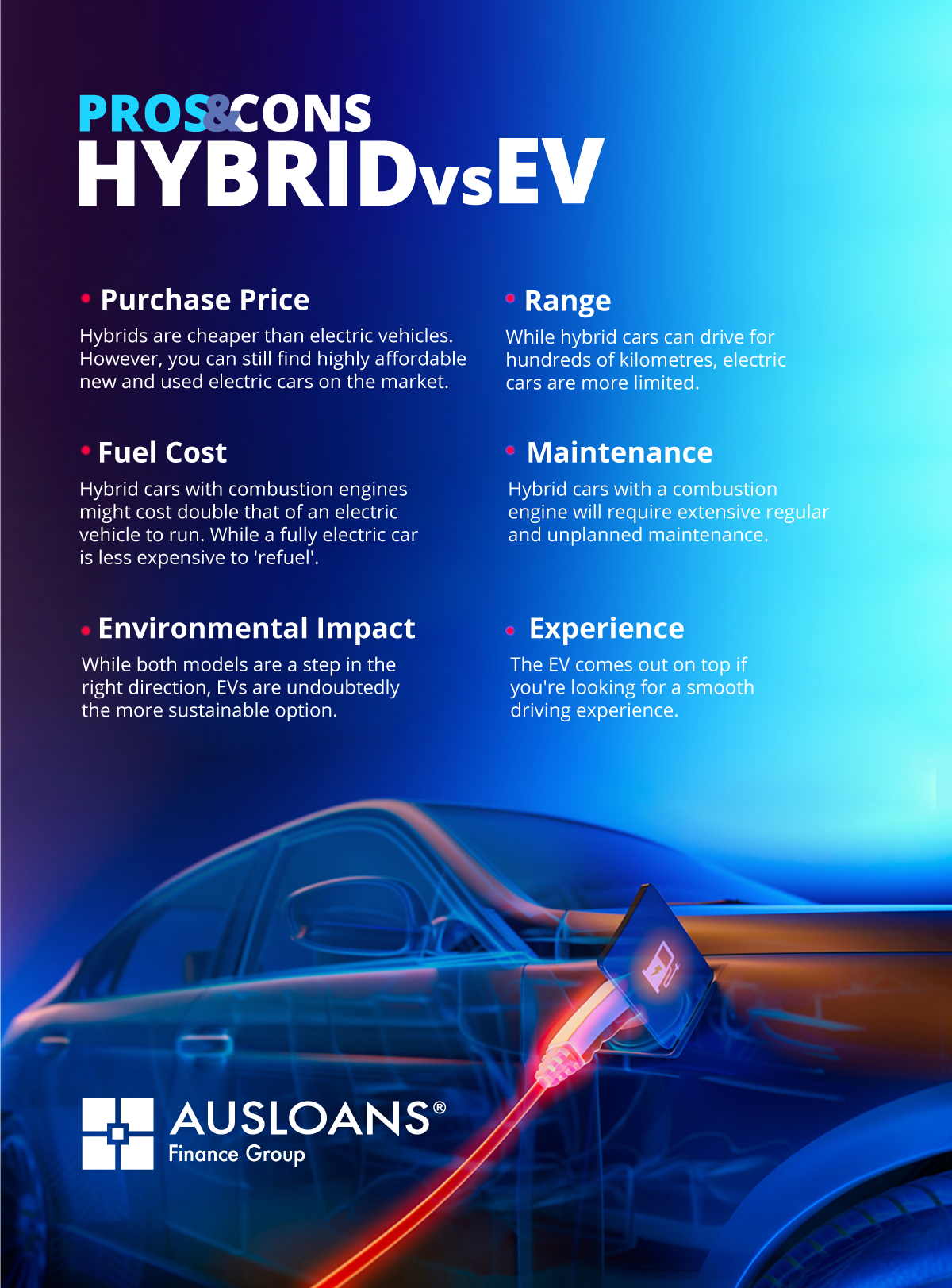
Hybrid vs electric: the pros and cons at a glance
Hybrid pros
- no need to rely on public charging
- familiar driving experience for people moving from a petrol car
- often more efficient than a standard petrol vehicle in stop-start traffic
- useful for drivers who regularly travel long distances
Hybrid cons
- still relies on petrol
- servicing can be more complex than a full EV because there is still an engine and related mechanical components
- fuel savings can vary depending on how and where you drive
- some buyers assume all hybrids deliver the same benefits, but HEVs and PHEVs work quite differently
Electric car pros
- no petrol required
- lower day-to-day running costs in many cases, especially when charging at home
- quieter drive and smooth acceleration
- fewer moving parts than many petrol or hybrid vehicles
- no tailpipe emissions while driving
Electric car cons
- charging access matters, especially for apartment living or drivers without reliable off-street parking
- purchase prices can still be higher in some parts of the market
- long regional trips may require more route planning
- charging times vary depending on the vehicle and charger type
Are hybrids cheaper to run than electric cars?
Not usually over day-to-day use, but it depends on the type of driving you do.
A standard hybrid can reduce fuel use compared with a regular petrol vehicle, especially in urban traffic where regenerative braking helps recharge the battery. That can make hybrids attractive for drivers who want better efficiency without changing their routine too much.
A full electric car can be cheaper to run if you have convenient charging and spend a lot of time on the road. Electricity often costs less than petrol per kilometre, and EVs generally have fewer routine engine-related maintenance needs.
That said, the total cost of ownership is not just about fuel or charging. It can also include:
- purchase price
- servicing and maintenance
- registration or state-based incentives
- insurance
- tyre wear
- resale value
- charging setup costs at home, if needed
For some households, a hybrid is the lower-friction choice. For others, an EV may make more sense over the longer term if charging is easy and the car is used often enough to realise those running-cost benefits.
Is a hybrid or electric car better for long-distance driving?
For many Australian drivers, hybrids still feel easier for regular long-distance travel.
That is mostly because refuelling is fast and petrol stations are easy to find. If you often drive between regional towns, tow regularly or do long trips without much notice, a hybrid may feel more flexible.
An electric car can still work well for long-distance driving, but it generally rewards more planning. Drivers need to think about charging stops, charger availability and how far they typically travel between breaks. For many people this is manageable, but it is not the same experience as filling up with petrol in a few minutes.
If most of your driving is local, commuting-based or within metro and major regional corridors, an EV may still be the stronger option.
What about charging convenience?
Charging convenience is one of the biggest deciding factors when comparing hybrids and EVs.
A hybrid electric vehicle does not need to be plugged in, so there is no real charging behaviour to think about in daily use. A plug-in hybrid does need charging if you want to get the most from its electric-only range, but it can still fall back on petrol when needed.
A full EV depends on charging access. That often works best when you can charge at home overnight, or when your usual routine makes workplace or public charging easy. Without that access, the convenience gap between a hybrid and an EV becomes much more noticeable.
This is why the best vehicle on paper is not always the best vehicle in practice. An EV can be excellent for the right household, but a hybrid may suit drivers who cannot yet charge simply and consistently.
Do electric cars need less maintenance than hybrids?
In many cases, yes.
A full electric car does not have engine oil changes, spark plugs or many of the moving parts found in petrol-powered vehicles. That can mean less routine mechanical servicing over time.
A hybrid still includes an internal combustion engine, so many traditional servicing requirements remain. While hybrids are well established and can be very reliable, they do not usually offer the same mechanical simplicity as a battery electric vehicle.
That does not mean an EV is maintenance-free. Tyres, brakes, suspension, software, batteries and general wear still matter. But when comparing vehicle systems alone, a full EV is usually simpler than a hybrid.
Are there still incentives for hybrids or electric cars in Australia?
This area has changed a lot over time, so buyers should always check the latest federal and state rules before making a decision.
In general, electric vehicle incentives in Australia have become more limited and more specific than they were during the earlier phase of EV adoption. Depending on where you live, support may come through stamp duty concessions, registration discounts, fleet or novated lease tax treatment, or other state-based benefits.
Hybrids and EVs are not always treated the same way. Plug-in hybrids in particular need closer attention because tax settings have changed. From 1 April 2025, plug-in hybrid electric vehicles are generally no longer eligible for the electric car fringe benefits tax exemption unless transitional rules apply.
If incentives are an important part of your decision, read our guide to government incentives for electric vehicles and verify the current rules in your state or territory.
Who should buy a hybrid?
A hybrid may suit you if:
- you do not have easy home charging
- you drive long distances regularly
- you want better fuel efficiency than a petrol car without changing your routine too much
- you want an easier stepping stone before moving to a full EV
- you live in a regional area where charging access still feels inconsistent
For many buyers, the biggest advantage of a hybrid is convenience. It offers some electrification benefits without requiring a full shift in behaviour.
Who should buy an electric car?
An electric car may suit you if:
- you can charge at home or easily as part of your routine
- most of your driving is commuting, school runs or metro travel
- you want to reduce fuel costs and avoid petrol altogether
- you prefer a quieter and simpler driving experience
- you are comfortable planning longer trips when needed
For the right driver, an EV can be cheaper to run, easier to live with than expected and better aligned with how modern households actually use a car.
Hybrid vs electric cars: which is better?

There is no universal winner.
A hybrid is often better for drivers who want flexibility, familiar refuelling and fewer lifestyle changes. An electric car is often better for drivers who have easy access to charging and want lower running costs, less engine-related maintenance and a more fully electric driving experience.
If you are still deciding, the best question is not whether hybrids or EVs are better overall. It is which option fits your driving patterns, charging access and budget more naturally.
If you are narrowing down your next vehicle and want to understand the ownership side as well as the funding side, you can also explore our EV car loans page.
Related reading