Share this
by Ivan Lovos on Nov 23, 2026, 4:10:57 PM
Equipment finance brokers sit at the intersection of two industries that never slow down: business growth and asset ownership. Every tradie buying a new excavator, every transport company adding a truck to the fleet, every dental practice upgrading equipment — someone is arranging that finance, and increasingly, it's a broker rather than a bank teller.
If you're weighing up how to become an equipment finance broker, the path is more structured than people expect, but it rewards people who treat it as a relationship business first and a paperwork process second.
What an equipment finance broker does day to day
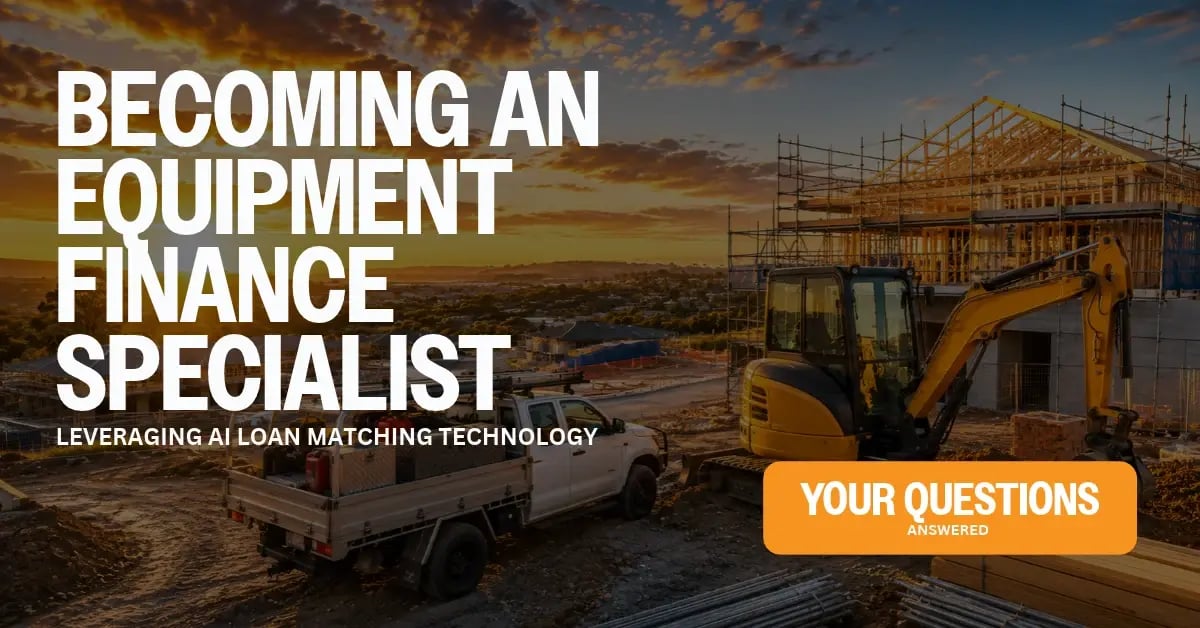
Strip away the job title and the work comes down to three things: sourcing clients who need to finance an asset, matching them to a lender who'll actually approve the deal, and managing the application through to settlement. That last part matters more than most people realise going in; a broker who disappears after submitting paperwork doesn't last long in this industry. Repeat business and referrals come from brokers who chase down conditions, chase up dealers and keep clients informed when a deal stalls.
Most days involve a mix of client calls, lender submissions, credit checks and following up on outstanding documents. It's less "sales pitch" and more "project management with a finance licence".
The licensing and compliance requirements you’ll need to meet
This is the non-negotiable part, and it's where a lot of people underestimate the runway.
Get credit representative status or an Australian Credit Licence
Under the National Consumer Credit Protection Act, you can't arrange consumer or commercial credit without either holding an Australian Credit Licence (ACL) yourself or operating as a credit representative under someone else's. Most new brokers start as a credit representative attached to an aggregator, because applying for your own ACL as a solo operator is slower and more expensive than it's worth in year one.
Complete Cert IV or Diploma in Finance and Mortgage Broking
A Certificate IV in Finance and Mortgage Broking (FNS40821) is the baseline qualification most aggregators require before they'll sponsor your credit representative status. Some will ask for the Diploma (FNS50322) as well, particularly if you're planning to write commercial or asset finance rather than residential mortgages. This qualification is the real starting point for anyone serious about how to become an equipment finance broker, so budget a few months to complete it alongside other prep work.
Building skills that get you deals beyond applications
Passing the course gets you in the door. What keeps you in the industry is knowing the product cold.
Learn to read equipment and asset categories
Lenders treat a five-year-old excavator very differently to a new delivery van, and that difference shows up in loan terms, deposit requirements and approval speed. Spend time learning how different lenders categorise primary assets versus secondary or specialty equipment: earthmoving, medical, hospitality and agricultural. That knowledge is what separates a broker who can structure a deal from one who's just filling in forms.
Get comfortable with lender criteria and deal structuring
Every lender on a panel has its own appetite: some are aggressive on low-doc deals, others won't touch a business under two years old, others specialise in bad-credit approvals. Knowing which lender to approach first — instead of shopping an application around after three rejections — is the single biggest efficiency gain a new broker can make.
Finding your first client as a new broker
Qualifications and licensing get you into the industry, but nobody settles a deal on a certificate alone. This is the part of how to become an equipment finance broker that catches most newcomers off guard: client flow doesn't just show up once you're accredited.
Tap into dealership and supplier relationships
Equipment dealers, machinery suppliers and truck yards deal with finance conversations constantly, and most don't have an in-house broker relationship that's actually responsive. Building a handful of solid dealer referral relationships early on tends to produce steadier deal flow than cold outreach ever will.
Use aggregator lead flow instead of cold prospecting
This is where the aggregator you choose starts to matter beyond compliance. Some aggregators run their own lead generation and pass warm enquiries to their broker network, which shortens the runway to your first settled deal considerably compared to building a client base from zero.
Choosing an aggregator or franchise model
Not all aggregators or franchise models offer the same level of support. Before joining, compare a few key areas:
Lender panel
Check how many lenders you’ll have access to and whether the panel covers a broad range of borrower needs.
Technology
Look at whether the platform makes matching, applications and submissions easier or adds more admin.
Lead flow
Some models expect you to generate every client yourself, while others provide access to leads or marketing support.
Ongoing support
Training, compliance assistance, mentoring and day-to-day support can all make a difference, especially in your first year.
Ausloans gives brokers access to a 70+ lender panel, the Zink platform for faster matching and submissions and an existing pool of finance leads, which can be particularly useful when you’re still building your own client base.
Start writing equipment finance deals with Ausloans
If you've got your Cert IV underway and you're ready to move past the theory of how to become an equipment finance broker, the fastest next step is aligning yourself with an aggregator that gives you lender access, technology and lead flow from day one. Explore broker opportunities with Ausloans and find out what a 70+ lender panel and the Zink platform could mean for your first year of settlements.